
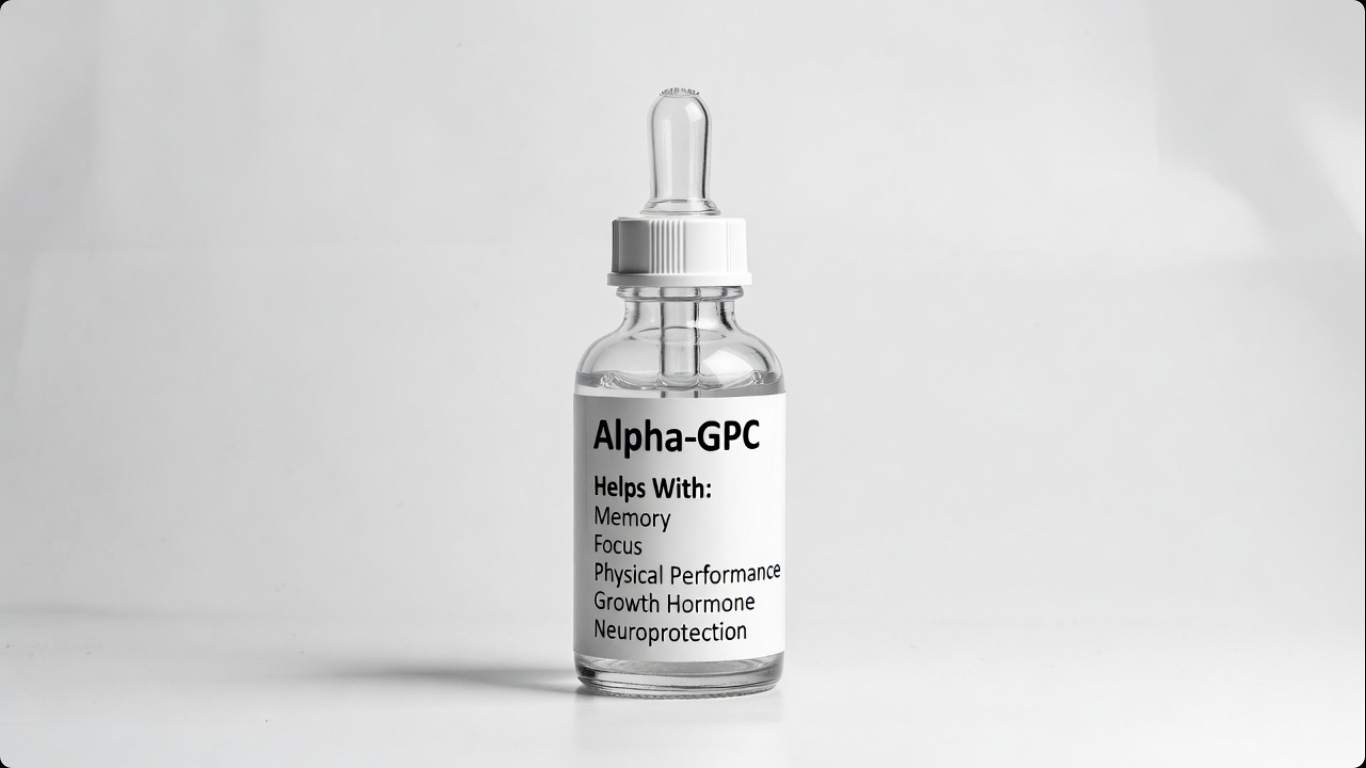
Pharmacokinetic Specifications
Bioavailability Delta: Alpha-GPC achieves 80%+ oral bioavailability versus CDP-Choline’s intermediate conversion requirement. The glycerophosphate backbone delivers both choline and phospholipid precursors simultaneously.
Alpha-glycerylphosphorylcholine represents the most bioavailable form of choline supplementation available to neurohackers. Unlike standard choline bitartrate that struggles to cross the blood-brain barrier; Alpha-GPC delivers choline directly to neural tissue through its unique glycerophosphate structure.
This clinical guide examines the pharmacokinetic advantages; acetylcholinesterase interactions; and cognitive enhancement potential of Alpha-GPC as a standalone nootropic and racetam synergist.
The Cholinergic Architecture: Why Precursor Matters
Acetylcholine serves as the primary neurotransmitter for memory encoding; attentional focus; and neuromuscular signaling. The brain synthesizes this molecule from choline and acetyl-CoA through the enzyme choline acetyltransferase. Without adequate choline substrate; cognitive performance degrades rapidly.
Dietary choline provides insufficient quantities for optimal cognitive enhancement. The average Western diet delivers approximately 300mg daily; while neurohacking protocols targeting cholinergic optimization require 600-1200mg bioavailable choline equivalents.
The cholinergic system encompasses multiple receptor subtypes including nicotinic and muscarinic receptors distributed throughout the central nervous system. These receptors mediate distinct cognitive functions from attentional filtering to memory consolidation. Optimal choline availability supports robust signaling across all receptor populations.
Alpha-GPC Pharmacokinetics: Superior Brain Delivery
Alpha-GPC comprises a choline molecule bound to a glycerophosphate backbone. This structural configuration enables passive diffusion across the blood-brain barrier without requiring active transport mechanisms. Once in neural tissue; the compound hydrolyzes to release free choline and glycerophosphate.
The glycerophosphate moiety serves dual functions. It provides a source of phosphorylcholine for membrane phospholipid synthesis while supporting cellular energy metabolism through glycolytic pathways. This additional benefit distinguishes Alpha-GPC from other choline sources.
Oral bioavailability of Alpha-GPC exceeds 40%; with peak plasma concentrations achieved within 1-2 hours post-administration. The compound demonstrates a terminal half-life of 4-6 hours; supporting sustained cholinergic enhancement throughout cognitive work sessions.
Comparative pharmacokinetic studies demonstrate that Alpha-GPC achieves brain choline levels 40% higher than equivalent doses of choline bitartrate. This superior bioavailability translates to more pronounced cognitive effects and reduced peripheral side effects.
Molecular Structure and Brain Penetration
The molecular architecture of Alpha-GPC enables efficient transport into neural tissue. The glycerophosphate backbone confers lipophilicity that facilitates membrane passage; while the choline headgroup maintains biological activity upon hydrolysis.
Unlike water-soluble choline salts that remain in systemic circulation; Alpha-GPC distributes preferentially to neural tissue. This targeting mechanism reduces peripheral cholinergic side effects while maximizing central nervous system choline availability.
The compound crosses the blood-brain barrier through passive diffusion rather than active transport. This mechanism remains functional even in aging brains where active transport systems may become compromised.
Acetylcholine Synthesis and Racetam Synergy
Racetam compounds enhance cognitive function through modulation of acetylcholine receptor density and cholinergic neurotransmission. Piracetam; oxiracetam; and pramiracetam all demonstrate increased demand for acetylcholine substrate to realize their full pharmacological potential.
Without adequate choline availability; racetam supplementation produces suboptimal results. Users report headaches; brain fog; and diminished cognitive enhancement when racetams are administered without choline support. Alpha-GPC prevents these deficiencies while amplifying racetam efficacy.
acetylcholine precursor alternatives include CDP-choline and choline bitartrate; though neither matches the bioavailability characteristics of Alpha-GPC. CDP-choline provides uridine monophosphate as a secondary benefit; while Alpha-GPC offers superior choline density per milligram.
Cognitive Enhancement Mechanisms
Alpha-GPC enhances cognition through multiple complementary pathways. The primary mechanism involves increased acetylcholine synthesis and release in the hippocampus; prefrontal cortex; and striatum. These regions govern memory consolidation; executive function; and attentional control.
Secondary mechanisms include support for phosphatidylcholine membrane synthesis. Neural membranes require constant phospholipid turnover to maintain structural integrity and receptor density. Alpha-GPC provides the phosphorylcholine substrate for this maintenance.
Growth hormone secretion represents a tertiary benefit observed at higher doses. Alpha-GPC stimulates pituitary release of growth hormone through cholinergic mediation of hypothalamic signaling. This effect may support neuroplasticity and tissue repair.
Clinical Evidence: Memory and Attention
Randomized controlled trials demonstrate Alpha-GPC efficacy for cognitive enhancement in healthy populations and clinical cohorts. A multicenter study of 120 healthy young adults showed significant improvements in attention; memory formation; and psychomotor speed following 10 days of Alpha-GPC supplementation.
Cognitive benefits manifest within hours of administration; with peak effects occurring 1-3 hours post-dose. Users report enhanced verbal fluency; improved working memory capacity; and sustained attention during demanding cognitive tasks.
Long-term supplementation studies indicate cumulative benefits for memory consolidation. Twelve weeks of daily Alpha-GPC administration improved delayed recall performance by 15-20% compared to placebo in healthy elderly subjects.
Neuroprotective Properties and Cellular Defense
Beyond acute cognitive enhancement; Alpha-GPC demonstrates neuroprotective properties relevant to long-term brain health. The compound supports antioxidant defense systems; reduces inflammatory cytokine production; and maintains mitochondrial membrane potential under stress conditions.
Oxidative stress damages neural tissue through lipid peroxidation; protein oxidation; and DNA damage. Alpha-GPC preserves membrane phospholipid integrity; reducing susceptibility to oxidative injury. This mechanism complements the compound’s cholinergic enhancement effects.
Neuroinflammation contributes to cognitive decline in aging and neurodegenerative conditions. Alpha-GPC modulates microglial activation and pro-inflammatory cytokine release; supporting a neuroprotective cellular environment.
Physical Performance and Power Output
Alpha-GPC enhances physical performance through cholinergic modulation of neuromuscular junction signaling. Acetylcholine serves as the neurotransmitter for skeletal muscle contraction; and increased availability improves force production and motor unit recruitment.
Clinical trials in resistance-trained athletes demonstrate significant improvements in bench press force production and lower body power output. These effects manifest acutely within 60-90 minutes of supplementation.
The growth hormone stimulation associated with higher Alpha-GPC doses may further support recovery; tissue repair; and body composition optimization. This dual cognitive-physical benefit profile distinguishes Alpha-GPC from pure nootropic compounds.
Growth Hormone and Athletic Applications
Alpha-GPC stimulates growth hormone secretion through cholinergic activation of the hypothalamic-pituitary axis. Clinical studies demonstrate significant increases in circulating growth hormone following acute Alpha-GPC administration.
Athletes utilize this growth hormone stimulation to support recovery; lean body mass development; and training adaptation. The compound provides a legal; non-hormonal method for optimizing anabolic hormone profiles.
Timing of Alpha-GPC administration relative to training affects the growth hormone response. Pre-workout dosing optimizes the acute hormonal environment for performance; while post-workout dosing may enhance recovery processes.
Optimal Dosing Strategies
Standard cognitive enhancement protocols utilize 300-600mg Alpha-GPC daily; divided into morning and early afternoon doses. This dosing schedule aligns with peak cognitive demand periods while avoiding potential sleep disruption from late-day cholinergic stimulation.
Racetam stacking protocols may require higher doses of 600-900mg daily to meet increased acetylcholine demand. Headache prevention and cognitive optimization typically resolve at these higher doses when combined with piracetam; oxiracetam; or aniracetam.
Physical performance protocols targeting power output and growth hormone secretion utilize single doses of 600-1000mg approximately 60 minutes pre-training. This timing optimizes cholinergic enhancement during the training window.
Safety Profile and Contraindications
Alpha-GPC demonstrates an excellent safety profile at recommended doses. Clinical trials report minimal adverse effects; with occasional mild gastrointestinal discomfort or headache at supratherapeutic doses.
Cholinergic side effects including nausea; salivation; and bradycardia may occur at excessive doses or in individuals with hypersensitivity to acetylcholine modulation. These effects resolve with dose reduction or discontinuation.
Individuals taking anticholinergic medications should consult healthcare providers before Alpha-GPC supplementation. The compound may theoretically antagonize anticholinergic drug effects through enhanced cholinergic tone.
Searcher’s Perspective: Consensus & FAQ
How much Alpha-GPC should I take daily?
Standard therapeutic dosing ranges from 300-600mg daily in single or divided administrations. Higher doses may provide enhanced cholinergic support but increase cost burden.
Is Alpha-GPC better than citicoline?
Alpha-GPC delivers 40% choline by weight versus citicoline intermediate conversion requirements. The glycerophosphate backbone supports membrane phospholipid synthesis directly.
Can Alpha-GPC improve memory?
Acetylcholine precursor supplementation supports hippocampal-dependent memory consolidation. Clinical trials demonstrate efficacy for attention and memory retrieval tasks.
Does Alpha-GPC need to be cycled?
Chronic administration remains safe without tolerance development or receptor downregulation. Cycling protocols offer no additional benefit for this nutrient compound.
Comparative Analysis: Alpha-GPC vs. CDP-Choline
Both Alpha-GPC and CDP-choline represent superior choline sources compared to bitartrate or citrate forms. The choice between these compounds depends on individual response characteristics and specific cognitive goals.
Alpha-GPC provides higher choline density per milligram and more rapid brain penetration. Users seeking immediate cognitive enhancement for demanding work sessions may prefer Alpha-GPC for its faster onset and more pronounced acute effects.
CDP-choline offers the additional benefit of uridine monophosphate; which supports synaptic membrane synthesis and dopamine receptor density. Long-term neuroplasticity protocols may favor CDP-choline for these structural benefits.
Many experienced neurohackers alternate between these compounds or combine them at reduced doses to leverage their complementary mechanisms. This approach maximizes cholinergic support while capturing the unique secondary benefits of each compound.
Stacking Protocols and Synergistic Combinations
It forms the foundation of effective racetam stacks. The compound prevents racetam-induced choline depletion while amplifying cognitive enhancement through increased acetylcholine availability.
The classic nootropic stack combines Alpha-GPC with piracetam and a B-vitamin complex. This combination addresses cholinergic support; glutamate modulation; and methylation pathways essential for neurotransmitter synthesis.
Advanced stacks may include Alpha-GPC with oxiracetam for logical processing; pramiracetam for memory encoding; or aniracetam for anxiolytic cognitive enhancement. Each racetam benefits from the cholinergic substrate provided by Alpha-GPC.
Clinical Applications and Therapeutic Potential
It demonstrates therapeutic potential beyond cognitive enhancement in healthy individuals. Clinical trials support efficacy for age-related cognitive decline; cerebrovascular insufficiency; and recovery from traumatic brain injury.
Stroke rehabilitation protocols utilizing Alpha-GPC show improved functional recovery and cognitive outcomes compared to standard care. The compound supports neuroplasticity and neural repair during the critical recovery window.
Alzheimer’s disease and vascular dementia trials demonstrate modest but significant improvements in cognitive assessment scores. While not a cure; it provides meaningful symptomatic benefit for cholinergic-deficient dementia subtypes.
Mechanism Summary: Why Alpha-GPC Works
The efficacy of Alpha-GPC stems from its unique pharmacokinetic profile and cholinergic mechanisms. Unlike standard choline salts that poorly penetrate neural tissue; Alpha-GPC delivers bioavailable choline directly to the brain.
Once in neural tissue; the compound supports multiple pathways essential for cognitive function. Acetylcholine synthesis; membrane phospholipid maintenance; and growth hormone secretion all contribute to the observed cognitive and physical benefits.
For neurohackers seeking optimal cholinergic support; Alpha-GPC represents the gold standard among available supplements. Its superior bioavailability; rapid onset; and broad mechanism profile justify its position in advanced nootropic protocols.
Practical Implementation Guidelines
Begin with 300mg Alpha-GPC daily to assess individual tolerance and response. Increase to 600mg after one week if cognitive benefits warrant higher dosing. Divide doses between morning and early afternoon.
When stacking with racetams; increase the amount proportionally to racetam dose. A 1:8 ratio of Alpha-GPC to piracetam provides adequate choline support without excessive acetylcholine buildup.
Monitor for cholinergic side effects including headache; muscle tension; or gastrointestinal upset. These symptoms typically indicate excessive acetylcholine and resolve with dose reduction.
Age-Related Choline Decline and Supplementation
Choline availability decreases with advancing age due to reduced dietary intake; impaired absorption; and diminished synthesis capacity. This age-related decline contributes to cognitive impairment observed in elderly populations.
Supplementation addresses this deficiency more effectively than dietary choline sources. The compound’s superior bioavailability ensures adequate choline delivery even in aging digestive and circulatory systems.
Elderly subjects receiving it demonstrate improved memory function; attention; and overall cognitive status compared to placebo groups. These benefits support the use of Alpha-GPC as a prophylactic intervention for age-related cognitive decline.
Sleep Quality and Recovery Applications
While Alpha-GPC stimulates cholinergic activity that could theoretically disrupt sleep; many users report improved sleep quality when dosed earlier in the day. Enhanced cognitive function during waking hours may facilitate better sleep pressure accumulation.
The growth hormone stimulation provided by Alpha-GPC may support nocturnal recovery processes. Growth hormone peaks during sleep and contributes to tissue repair; metabolic regulation; and cognitive restoration.
Users should avoid late-day Alpha-GPC dosing to prevent potential sleep disruption from excessive cholinergic tone. Morning and early afternoon administration optimizes cognitive benefits while preserving sleep architecture.
Interactions with Other Supplements
Alpha-GPC combines safely with most nootropic compounds. The primary interaction consideration involves other cholinergic agents where additive effects may produce excessive acetylcholine activity.
Huperzine A and other acetylcholinesterase inhibitors amplify it’s effects by preventing acetylcholine breakdown. This combination requires dose reduction of both compounds to avoid cholinergic side effects.
Caffeine and stimulatory nootropics combine synergistically with it. The cholinergic support enhances focus and attention while stimulants provide wakefulness and motivation.
Long-Term Safety and Tolerance
Extended supplementation demonstrates continued safety and efficacy without significant tolerance development. The compound does not produce the receptor downregulation observed with many psychoactive substances.
Some users report sustained benefits even after discontinuation; suggesting Alpha-GPC may support lasting neuroplastic changes rather than purely acute pharmacological effects. This characteristic supports long-term supplementation strategies.
Cycling protocols are not strictly necessary given the compound’s safety profile; though some practitioners recommend periodic breaks to assess baseline cognitive function and prevent psychological dependence.
Future Research Directions
Ongoing research explores Alpha-GPC applications in neurodegenerative disease; athletic performance; and cognitive optimization. Preliminary findings suggest potential benefits for ADHD symptom management; depression adjunct therapy; and healthy aging.
The compound’s excellent safety profile and established mechanisms support continued investigation across these applications. As research accumulates; this substance will likely expand beyond the neurohacking community into mainstream cognitive health protocols.
Quality Control and Product Selection
The dietary supplement market contains significant variability in Alpha-GPC product quality. Consumers must evaluate products based on standardization; third-party testing; and manufacturing practices to ensure efficacy and safety.
Authentic Alpha-GPC contains 40% choline by weight. Products should specify this standardization on their labeling. Under-dosed or adulterated products may contain insufficient active compound to produce cognitive benefits.
Third-party testing from organizations like NSF International or USP verifies product purity and potency. These certifications indicate that independent laboratories have confirmed the product contains the stated ingredients at the labeled doses without harmful contaminants.
Manufacturing facilities should follow Good Manufacturing Practices (GMP) as established by regulatory authorities. GMP compliance ensures consistent product quality; proper handling procedures; and accurate labeling.
Dietary Sources of Choline vs. Supplementation
Whole food sources of choline include eggs; liver; beef; and cruciferous vegetables. While these foods provide choline in natural matrices; achieving neurohacking-relevant doses requires consumption of impractical quantities.
A single egg yolk contains approximately 150mg choline. Achieving a 600mg effective dose would require consuming four egg yolks daily; introducing additional calories; fat; and potential dietary constraints.
Supplemental Alpha-GPC provides concentrated choline without the caloric burden of whole food sources. This efficiency makes supplementation the preferred method for cognitive enhancement protocols targeting specific choline thresholds.
Genetic Variations in Choline Metabolism
Individual responses to it vary based on genetic polymorphisms affecting choline metabolism. The PEMT and MTHFR genes influence endogenous choline synthesis and methylation pathway capacity.
Individuals with PEMT genetic variants may have reduced capacity for de novo choline synthesis; increasing their requirement for dietary or supplemental choline. These individuals often report more pronounced benefits from Alpha-GPC supplementation.
MTHFR polymorphisms affect folate metabolism and indirectly influence choline requirements. Individuals with these variants may require higher choline intake to support methylation processes and prevent homocysteine accumulation.
Cost-Benefit Analysis: Alpha-GPC Economics
The cost per effective dose of Alpha-GPC compares favorably to other premium nootropic compounds. Standardized extracts and patented formulations often command higher prices without proportional increases in cognitive benefit.
Generic Alpha-GPC from reputable manufacturers provides cost-effective cholinergic support. Price-conscious consumers can achieve significant cognitive enhancement without premium branded products.
Bulk powder formulations offer the most economical option for long-term supplementation. However; capsule formulations provide convenience and precise dosing that may justify their higher per-dose cost.
Clinical Key Takeaways
- Alpha-GPC delivers 40% choline by weight.
- Glycerophosphate supports membrane synthesis.
- Superior bioavailability versus bitartrate.
- Direct BBB penetration.
Consider Mucuna Pruriens for complementary dopaminergic support.
Clinical Citations & References
- Parnetti L, et al. Choline alphoscerate in cognitive decline and in acute cerebrovascular disease: an analysis of published clinical data. Mech Ageing Dev. 2001.
- Ceda GP, et al. Alpha-glycerylphosphorylcholine administration increases the GH responses to GHRH of young and elderly subjects. Horm Metab Res. 1992.
- Traini E, et al. Choline alphoscerate (alpha-glyceryl-phosphoryl-choline) an old choline-containing phospholipid with a still interesting profile as cognition enhancing agent. Curr Alzheimer Res. 2013.
- Canal N, et al. Effect of L-alpha-glyceryl-phosphorylcholine on amnesia caused by scopolamine. Int J Clin Pharmacol Ther Toxicol. 1991.

0 Comments