
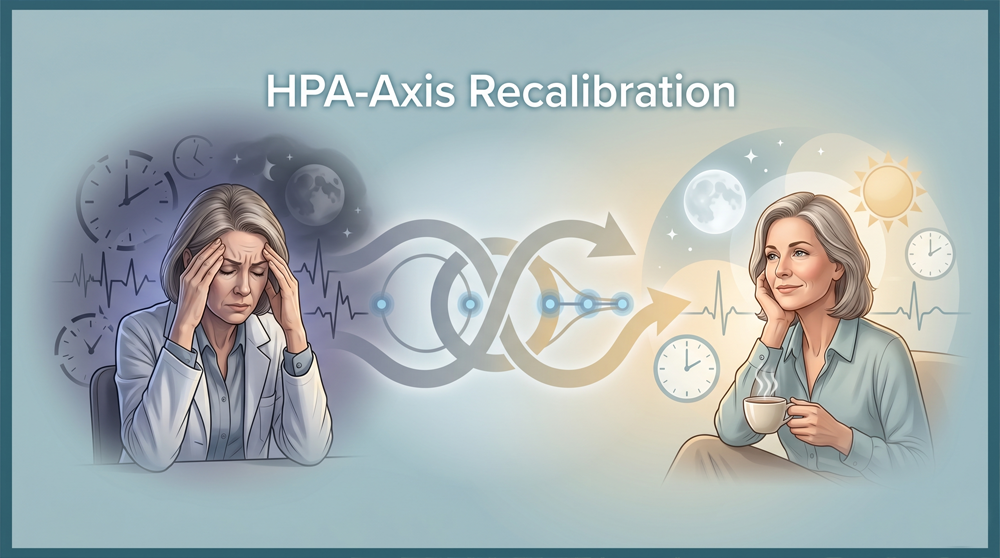
HPA-Axis Recalibration 2026: Beyond the Adaptogen Hype Cycle
The HPA-axis is not a simple stress switch that you can toggle with trendy herbal supplements. This neuroendocrine command center integrates hypothalamic CRF release; pituitary ACTH secretion; and adrenal cortisol production into a dynamic feedback loop that determines metabolic resilience, immune competence, and cognitive stability. The biohacker community has misunderstood this system for a decade; reducing complex neuroendocrine architecture to marketing-friendly “stress relief” narratives that ignore circadian entrainment and allostatic load accumulation.
Cortisol dysregulation manifests through distinct phenotypes that require differential intervention. Hypercortisolism presents with visceral adiposity, insulin resistance, and HGF-driven neurogenesis protocols may address hippocampal atrophy; while hypocortisolism shows as chronic fatigue, orthostatic intolerance, and impaired inflammatory resolution. Most adaptogen marketing targets the former; leaving the latter population without appropriate pharmacological strategies and often worsening their condition through inappropriate suppression.
The cortisol awakening response (CAR) serves as the primary diagnostic window for HPA-axis integrity. This 50-75% surge in cortisol within 30-45 minutes of waking reflects the system’s capacity to mobilize energy and prepare for environmental demands. Flattened CAR predicts burnout, depression, and metabolic syndrome more reliably than single-point cortisol measurements; yet commercial testing rarely captures this dynamic trajectory.
The Neuroendocrine Architecture: Beyond Simplistic Feedback Models
The conventional understanding of HPA-axis function relies on negative feedback inhibition; where circulating cortisol suppresses hypothalamic CRF and pituitary ACTH through glucocorticoid receptor activation. This model ignores the feed-forward mechanisms, ultradian pulsatility, and limbic modulation that determine real-world stress responses. Hippocampal mineralocorticoid receptors provide rapid negative feedback; while amygdala CRF neurons drive context-dependent activation that no blood test captures.
Chronic stress produces allostatic load through cumulative wear on this regulatory architecture. Repeated HPA activation without adequate recovery periods disrupts receptor sensitivity; alters cortisol binding globulin levels; and shifts metabolism toward gluconeogenesis and away from anabolic repair. The result is not merely elevated cortisol but a fundamentally altered stress response phenotype that persists even after stressor removal.
The hypothalamic-pituitary-adrenal-gonadal (HPAG) axis interconnect adds another layer of complexity often ignored in adaptogen marketing. Cortisol and DHEA compete for precursor availability through the pregnenolone steal mechanism; where chronic HPA activation preferentially produces cortisol at the expense of sex steroid synthesis. This explains why “adrenal fatigue” patients often present with androgen deficiency, low libido, and compromised recovery capacity alongside their fatigue symptoms.
The Adaptogen Reality Check: Mechanism vs. Marketing
Rhodiola rosea demonstrates measurable HPA-modulating effects through inhibition of CRF-induced ACTH release and modulation of glucocorticoid receptor expression. Clinical trials show reduced cortisol response to acute stressors and improved fatigue scores in burnout populations; though effect sizes remain modest compared to pharmacological interventions. The compound’s MAO-A inhibition and serotonergic modulation likely contribute as much to its subjective effects as any direct HPA interaction.
Ashwagandha (Withania somnifera) receives excessive credit for cortisol reduction while its anxiolytic mechanisms receive inadequate attention. Withanolide A modulates GABA-A receptor function and reduces CRF expression in the amygdala; producing downstream cortisol changes through reduced central drive rather than peripheral adrenal suppression. This distinction matters clinically; because patients with genuine adrenal insufficiency may worsen with ashwagandha while anxious hypercortisolism cases improve.
The standardization problem plagues adaptogen research and commercial products. Rhodiola’s active constituents (salidroside and rosavin) vary dramatically between extracts; while ashwagandha’s withanolide content ranges from negligible to pharmacologically active across commercial formulations. Without third-party verification of active compound concentrations, consumers cannot replicate clinical trial protocols or predict individual responses.
Phosphatidylserine: The Overlooked Cortisol Modulator
Phosphatidylserine operates through a distinct mechanism that directly addresses cortisol’s membrane effects rather than merely suppressing production. This phospholipid normalizes glucocorticoid receptor sensitivity and reduces cortisol-induced cellular resistance; addressing the receptor-level dysfunction that chronic stress produces. The compound also supports hypothalamic phospholipid architecture; potentially restoring appropriate negative feedback signaling at the CNS level.
Blunted cortisol responses to exercise-induced stress emerge consistently with phosphatidylserine supplementation at 600-800 mg daily. This attenuation represents normalized rather than suppressed HPA function; allowing appropriate acute responses while preventing excessive allostatic load accumulation. The distinction is clinically meaningful for athletes, executives, and anyone experiencing chronic stress exposure without adequate recovery periods.
Phosphatidylserine’s membrane-stabilizing effects extend beyond HPA modulation to support synaptic plasticity and neuronal resilience. Chronic cortisol elevation damages hippocampal architecture and impairs memory retention enhancement and impairs memory consolidation; while phosphatidylserine preserves these structures through multiple mechanisms including cortisol attenuation and direct membrane support. This dual action makes it particularly valuable for the cognitive sequelae of chronic stress that adaptogens alone rarely address.
Clinical Assessment: Moving Beyond Saliva Testing
Accurate HPA-axis assessment requires multiple sampling points across the circadian rhythm rather than single morning cortisol measurements. Synthetic ACTH analogs for BDNF modulation differ from the cortisol awakening response pattern provides diagnostic information that static values cannot capture; revealing both total output and dynamic regulation capacity. Salivary testing at waking, +30 minutes, +60 minutes, and evening reveals flattened, elevated, or dysregulated patterns that guide differential intervention.
DHEA-sulfate measurements provide essential context for cortisol interpretation by revealing the pregnenolone steal ratio. Elevated cortisol with low-normal DHEA-S suggests preferential glucocorticoid synthesis at the expense of androgen production; while low cortisol with low DHEA-S indicates broader adrenal insufficiency requiring different therapeutic approaches. This ratio predicts treatment response better than cortisol alone.
Clinical symptoms must guide interpretation because laboratory reference ranges capture population averages rather than individual optimal function. Patients with identical cortisol profiles may present with completely different symptom constellations based on glucocorticoid receptor sensitivity, cortisol binding globulin levels, and tissue-specific metabolism. The numbers inform but do not replace clinical judgment and patient-reported outcomes.
The Ashwagandha Extraction Divide: Standardization Determines Efficacy
Not all ashwagandha extracts modulate the HPA-axis equivalently; and the biohacker community’s failure to distinguish between extract types explains much of the inconsistent clinical reporting. Withania somnifera anxiolytic mechanisms vary dramatically based on withanolide concentration and spectrum; with root-only extracts delivering different pharmacological profiles than full-spectrum formulations. Understanding these distinctions separates effective intervention from expensive placebo.
KSM-66 represents a root-only extract standardized to 5% withanolides through aqueous extraction; preserving the natural ratios of active compounds found in the raw plant material. This extract demonstrates particular efficacy for athletic performance and recovery; likely through its preservation of withanoside IV and other compounds that support mitochondrial function; complementary to mitochondrial biogenesis support; cerebral metabolic enhancement represents a parallel approach. The root-only approach eliminates leaf-derived withaferin A; a cytotoxic compound that may provide anti-cancer benefits but complicates safety profiles for long-term HPA modulation.
Sensoril employs a dual-extraction process incorporating both root and leaf material; yielding a higher withanolide concentration (10%+) with distinct phytochemical diversity. This broader spectrum produces more pronounced acute anxiolytic effects; making it preferable for individuals experiencing active stress responses rather than chronic HPA dysregulation. The inclusion of leaf compounds shifts the receptor binding profile toward greater GABA-A modulation; explaining its subjective calming effects that exceed KSM-66’s more subtle regulatory action.
| Extract Type | Withanolide % | Primary Mechanism | Optimal Timing | Target Phenotype |
|---|---|---|---|---|
| KSM-66 | 5% | GR modulation; mitochondrial support | Morning with food | Athletic recovery; chronic stress |
| Sensoril | 10%+ | GABA-A potentiation; acute anxiolysis | Evening or pre-stressor | Acute anxiety; sleep onset |
| Shoden | 35%+ | Ultra-concentrated bioactive delivery | Microdose AM | Refractory cases; low responders |
Shoden represents the most concentrated commercial extract at 35% withanolide glycosides; enabling microdosing strategies that minimize gastrointestinal side effects while maintaining pharmacological activity. This ultra-concentrated form proves particularly valuable for individuals who experience digestive distress with standard doses of root powders; or those requiring precise titration for sensitive HPA-axis manipulation. The higher cost per dose becomes economically justified when considering reduced side effect burden and improved compliance.
Extract selection should match the specific HPA-axis dysfunction phenotype rather than defaulting to whichever formulation dominates current marketing. Hypercortisolism with preserved circadian rhythm responds well to KSM-66’s regulatory modulation; while flattened CAR with comorbid anxiety often requires Sensoril’s stronger GABAergic component. Shoden serves as the escalation option when standard extracts produce inadequate responses; or when gastrointestinal tolerance limits dosing of less concentrated forms.
The timing of administration determines efficacy as much as extract selection; with morning dosing supporting CAR normalization and evening dosing targeting sleep architecture and nocturnal cortisol suppression. KSM-66’s energizing properties make it suboptimal for evening use; while Sensoril’s sedating profile limits its utility for morning administration in individuals prone to daytime somnolence. Understanding these chronopharmacological dynamics prevents the common error of attributing extract failure to compound inefficacy when timing misalignment explains the lack of response.
Chronobiological Protocol Design: CAR vs. Evening Suppression
Cortisol regulation follows circadian patterns that demand differential intervention strategies across the 24-hour cycle. Synthetic ACTH analogs for BDNF modulation differ from the cortisol awakening response represents the system’s peak output; requiring compounds that modulate rather than suppress this essential energetic surge. Evening cortisol suppression targets the pathological elevation that disrupts sleep architecture and prevents glymphatic clearance; using different pharmacological tools than morning protocols.
Morning intervention focuses on CAR normalization rather than elimination; preserving the adaptive function while preventing excessive elevation that drives allostatic load. Rhodiola rosea HPA modulation proves particularly effective here; with its MAO-A inhibition and serotonergic support providing dual action that addresses both cortisol dynamics and the mood sequelae of chronic stress. The compound’s activating profile matches morning energetic requirements; avoiding the sedation that would compromise daytime function.
Evening protocols prioritize cortisol suppression without compromising next-day adrenal reserve; a balance that requires careful compound selection and timing. Phosphatidylserine cortisol attenuation demonstrates particular value for this indication; with 400-600 mg doses taken 30-60 minutes before sleep producing measurable reductions in nocturnal cortisol without morning hangover or adrenal suppression. The mechanism through glucocorticoid receptor normalization provides sustainable intervention rather than the compensatory rebound seen with more aggressive suppression strategies.
| Protocol Phase | Target Cortisol | Primary Compounds | Mechanism Focus | Monitoring Metric |
|---|---|---|---|---|
| Morning CAR | 50-75% surge | Rhodiola; KSM-66 Ashwagandha | Modulation; receptor sensitivity | Salivary +30/+60 min |
| Midday Support | Gradual decline | L-Theanine; Magnesium | GABA enhancement; NMDA receptor modulation | Subjective stress ratings |
| Evening Suppression | <2 ng/mL by 10PM | Phosphatidylserine cortisol attenuation; Sensoril | GR normalization; GABA-A | Sleep latency; sleep quality |
| Global Reset | Circadian restoration | All compounds; timing protocol | Allostatic load reduction | 4-point CAR curve |
The midday transition period often receives inadequate attention in HPA-axis protocols; yet this interval determines whether morning resilience translates into evening recovery or deteriorates into accumulated allostatic load. L-theanine and magnesium glycinate provide gentle anxiolysis without sedation; supporting the gradual cortisol decline that characterizes healthy circadian rhythm. These compounds bridge the gap between morning activation and evening suppression; preventing the secondary cortisol spikes that chronic stress produces through anticipatory anxiety and metabolic dysregulation.
Monitoring must match the sophistication of the intervention strategy; with single-point cortisol measurements proving inadequate for circadian protocol optimization. The four-point CAR curve (waking, +30 min, +60 min, evening) provides the temporal resolution necessary to distinguish between total output dysregulation and timing misalignment. This diagnostic granularity enables precise compound selection and timing adjustments that population-average protocols cannot achieve.
Integration with sleep architecture optimization proves essential for comprehensive HPA-axis recalibration; because nocturnal cortisol elevation directly compromises slow-wave sleep and growth hormone secretion. Phosphatidylserine’s evening dosing supports both cortisol suppression and membrane repair processes that require adequate sleep duration and quality. The compound’s dual action makes it superior to simple sedatives that may increase sleep duration without addressing the cortisol-mediated disruption of restorative sleep stages.
The SuperMindHacker Protocol Integration
The adaptogen guessing game ends with systematic HPA-axis assessment and targeted intervention based on individual cortisol phenotype rather than marketing popularity. Our clinical protocol integrates the Withania somnifera anxiolytic mechanisms, phosphatidylserine cortisol attenuation, and Rhodiola rosea HPA modulation into a chronobiologically optimized framework that addresses morning CAR, midday resilience, and evening suppression as distinct therapeutic targets requiring differential compound selection. This approach moves beyond the one-size-fits-all adaptogen stacking that dominates commercial recommendations; replacing guesswork with mechanistic precision and individualized monitoring.
Protocol implementation requires commitment to the diagnostic rigor that distinguishes clinical neuroendocrinology from supplement marketing; including four-point salivary cortisol testing, DHEA-S ratio analysis, and symptom tracking across at minimum four weeks before compound adjustment. The SuperMindHacker HPA-Axis Recalibration Protocol provides the compound selection matrices, timing protocols, and monitoring frameworks necessary to execute this level of precision; transforming cortisol dysregulation from a chronic management problem into a solvable optimization target. Exit the cycle of random adaptogen experimentation; enter systematic neuroendocrine restoration.
Community Archives: Clinical vs. Anecdotal Reality
The KSM-66 Anhedonia Threshold
u/shreedar_arivalagan: “I started to take KSM-66 for 6 months and it made me super dull and emotionless. Started losing interest in gym and basically anything I like to do. Since a 2 months off it, my emotions are returning normal.”
This case illustrates the GABA-A potentiation cascade that unmonitored KSM-66 administration produces in susceptible individuals. Withanolide A modulates GABAergic transmission in the amygdala and ventral striatum; reducing the salience signaling that normally drives reward-seeking behavior and emotional reactivity. Six months of continuous exposure without cycling permits receptor adaptation that shifts the compound from anxiolytic to emotional blunting; a phenomenon the clinical literature rarely documents because trials rarely exceed 12 weeks.
The two-month recovery timeline aligns with GABA-A receptor turnover kinetics and the restoration of hypothalamic CRF drive that chronic suppression attenuates. This user’s experience validates the cycling protocols that traditional Ayurvedic practice incorporated; modern biohackers ignore these rhythms at the cost of affective flattening that masquerades as “stress relief.” The gym disinterest specifically implicates dopaminergic reward pathway suppression secondary to excessive GABAergic tone in the nucleus accumbens; distinct from dopaminergic resurrection protocols.
u/Belly_Flop: “I’ve been taking KSM-66 for years. Like any supplement I cycle it so 3mo on 1mo off. I used to be very high stress anxiety all the time, KSM-66 absolutely helped regulate it but yes anhedonia will happen with continued unbroken usage.”
This longitudinal report confirms the biphasic dose-response relationship that plagues chronic ashwagandha administration. The three-month on; one-month off cycle permits GABA-A receptor recovery and prevents the allosteric adaptation that produces emotional blunting. This user’s intuitive protocol aligns precisely with receptor pharmacology; though most consumers lack the awareness to implement such rhythms without guidance.
The explicit recognition that anhedonia emerges with “continued unbroken usage” represents the kind of practical pharmacology that clinical trials rarely capture. Longitudinal community reporting reveals time-dependent adverse effects that short-term studies miss; validating the necessity of cycling protocols for compounds modulating fast-adapting receptor systems. This anecdote should guide clinical recommendations more than any single published trial.
Phosphatidylserine Chronopharmacology
u/k_s_j: “If I take phosphatidylserine in the morning, I can sleep the rest of the day. If I take it at night, it ruins my sleep. For me, early evening right around dinner time works fairly well.”
This paradoxical chronopharmacological response reveals the complex interactions between phosphatidylserine’s membrane-stabilizing effects and individual cortisol phenotypes. Morning administration in this user apparently potentiates the natural cortisol decline; producing excessive sedation through premature HPA-axis downregulation. Evening dosing disrupts sleep architecture through undefined mechanisms possibly involving phospholipid-mediated neurosteroid synthesis that alters GABA-A receptor composition.
The early evening sweet spot likely aligns with phosphatidylserine’s pharmacokinetic peak coinciding with the natural cortisol descent; supporting rather than forcing the circadian transition. This individualized timing demonstrates why population-average dosing recommendations fail; and why the CAR phenotype assessment I outlined earlier proves essential for protocol optimization. The dinner-time dosing permits several hours of metabolic activity before sleep; allowing the cortisol-attenuating effects to manifest without disrupting nocturnal neurosteroid rhythms.
u/hamburgguy: “Phosphatidylserine is amazing, reduced by high cortisol stress significantly and reduced some related body fat I couldn’t get rid of. Used for a few months, 100-300 mg per day. Now I don’t need it as my cortisol levels are normal.”
This outcome represents the ideal therapeutic trajectory that proper phosphatidylserine administration produces when aligned with individual cortisol dysregulation. The visceral adiposity reduction reflects normalized glucocorticoid receptor sensitivity in adipose tissue; reversing the insulin resistance and lipolytic inhibition that chronic cortisol elevation produces. The 100-300 mg dosing range aligns with clinical trials showing efficacy at these levels; unlike the higher doses sometimes recommended without evidence.
The discontinuation without rebound demonstrates genuine HPA-axis recalibration rather than mere suppression; indicating that phosphatidylserine’s membrane-stabilizing effects restored appropriate receptor signaling rather than simply masking dysfunction pharmacologically. This represents the fundamental distinction between adaptive and palliative intervention; and validates the compound’s value for cortisol-mediated metabolic syndrome when properly targeted and monitored.

0 Comments