HPA-Axis Recalibration 2026: Beyond the Adaptogen Hype Cycle The HPA-axis is not a simple stress switch that you can toggle with trendy herbal supplements. This neuroendocrine command center integrates hypothalamic CRF release; pituitary ACTH secretion; and adrenal cortisol production into a...
Posts by David Gracey
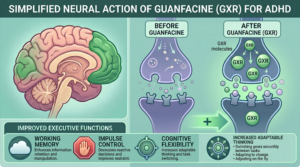
Guanfacine: Alpha-2A Precision for Executive Function
Guanfacine: Alpha-2A Precision for Executive Function Guanfacine represents a mechanistically distinct approach to attention deficit hyperactivity disorder. The compound selectively stimulates postsynaptic alpha-2A adrenergic receptors in the prefrontal cortex; this mechanism strengthens network...
Hydergine (Ergoloid Mesylates): The Clinical Master Guide to Cognitive Metabolism
Hydergine (Ergoloid Mesylates): Clinical Audit of an Ergot-Derived Compound for Cognitive Symptoms Hydergine represents a mixture of four dihydrogenated ergot alkaloids that emerged from Swiss pharmaceutical research in the mid-twentieth century. The compound combines dihydroergocristine,...
Pyritinol: The B6 Metabolic Analog Nootropic Cognitive Enhancer
Pyritinol: The B6 Metabolic Analog Pyritinol represents a semi-synthetic derivative of vitamin B6 that crosses the blood-brain barrier efficiently. The compound consists of two pyridoxine molecules joined by a disulfide bridge; this structural modification transforms a water-soluble vitamin into a...
PRL-8-53: The Memory Monolith
PRL-8-53: The Memory Monolith PRL-8-53 represents a structural outlier in the nootropic pharmacopeia. This synthetic compound bears the chemical name methyl 3-(2-(benzyl(methyl)amino)ethyl)benzoate hydrochloride; the structure defies easy classification within existing drug categories. Nikolaus...
Glutamate Receptors: The Systems Architect Protocol for Synaptic Efficacy
Glutamate: The Excitatory Core of Neural Computation Glutamate serves as the primary excitatory neurotransmitter within the mammalian central nervous system. This amino acid functions as the metabolic fuel powering synaptic communication throughout cortical and subcortical structures....
Selegiline (L-Deprenyl) Clinical Audit: The Dopaminergic Architect
The Molecular Architecture of MAO-B Selectivity Selegiline contains a propargylamine scaffold; this structure enables irreversible MAO-B inhibition. At low doses of 5mg to 10mg daily, the compound achieves absolute selectivity for the MAO-B isoform, leaving MAO-A activity intact for peripheral...
Post-SSRI Sexual Dysfunction (PSSD): The Clinical Audit of Serotonergic Epigenetic Silencing
The Serotonergic Epigenetic Silencing Hypothesis Selective serotonin reuptake inhibitors increase synaptic serotonin levels acutely through the inhibition of the SLC6A4 transporter. Chronic administration induces compensatory receptor adaptations across multiple neural circuits; 5-HT1A...
9-Me-BC: The Clinical Audit of Dopaminergic Resurrection and Reward System Restoration
The 9-Methyl-Beta-Carboline Molecular Architecture 9-Me-BC isn't your average stimulant. It represents a methylated beta-carboline derivative with potent dopaminergic properties. The compound crosses the blood-brain barrier efficiently; this bioavailability distinguishes it from larger...
Post-Finasteride Syndrome (PFS): The Clinical Audit of Neurosteroid Depletion
The 5-Alpha Reductase Inhibition Cascade: Post-Drug Physiological Failure Finasteride and dutasteride function as competitive inhibitors of 5-alpha reductase enzymes. These medications block the conversion of testosterone to dihydrotestosterone; this mechanism treats benign prostatic hyperplasia...
Cerebrolysin (CERE) Clinical Audit: The Porcine Peptide Protocol
The Porcine Peptidergic Composition Cerebrolysin isn't your standard synthetic nootropic; it's a porcine brain-derived peptide preparation with standardized neurotrophic factor content. The hydrolysate contains low-molecular-weight peptides and free amino acids that directly mimic endogenous...
Dihexa (PNB-0408): The Clinical Guide to HGF-Driven Neurogenesis
The Angiotensin IV Derivative Structure (PNB-0408) Dihexa, developmentally known by its clinical code PNB-0408, isn't just another peptide; it's a synthetic derivative of angiotensin IV specifically engineered to solve the blood-brain barrier problem. The architecture utilizes...
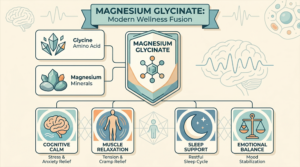
Magnesium Glycinate: The Elemental Gold Standard
Chelation Stability and Molecular Architecture Magnesium glycinate represents a chelated form where magnesium ions coordinate with two glycine amino acids. Magnesium-buffered bisglycinate chelate demonstrates superior intestinal absorption compared to inorganic magnesium salts; this enhanced...
NSI-189: The Hippocampal Reset for the “Burned-Out” Brain
Benzylpiperazine-Aminopyridine Chemistry: A Novel Scaffold NSI-189 represents a novel chemical scaffold combining benzylpiperazine and aminopyridine structural elements. Structural analysis reveals a unique molecular architecture distinct from traditional monoaminergic antidepressants. The...
Phosphatidylserine: The Phospholipid Architecture of Cortisol Modulation and Membrane Integrity
Phosphatidylserine: The Phospholipid Architecture of Cortisol Modulation and Membrane Integrity Phosphatidylserine constitutes the primary anionic phospholipid of the neural brain–barrier/” target=”_blank”>membrane. This molecule anchors signaling proteins and maintains membrane fluidity; its...
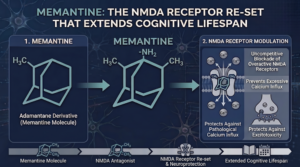
Memantine: The NMDA Receptor Re-set That Extends Cognitive Lifespan
Uncompetitive NMDA Antagonism: The Open-Channel Blockade Memantine functions as an uncompetitive, low-affinity, open-channel blocker at N-methyl-D-aspartate receptors. Paradigm shift research demonstrates that memantine enters the receptor-associated ion channel preferentially when activated by...
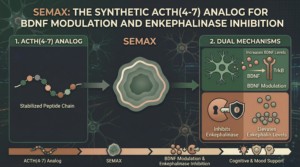
Semax: The Synthetic ACTH(4-7) Analog for BDNF Modulation and Enkephalinase Inhibition
Peptide Structure and Pharmacological Rationale Semax represents a synthetic heptapeptide analog of the adrenocorticotropic hormone fragment ACTH(4-10); the sequence Met-Glu-His-Phe-Arg-Trp-Gly (MEHFPGP) preserves the core pharmacophore while truncating the parent molecule. Russian pharmaceutical...
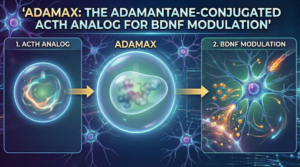
Adamax: The Adamantane-Conjugated ACTH Analog for BDNF Modulation
ACTH(4-10) Analog Structure and Adamantane Conjugation Adamax represents a synthetic analog of the adrenocorticotropic hormone fragment ACTH(4-10); this fragment comprises the seven amino acid sequence Met-Glu-His-Phe-Arg-Trp-Gly. Russian peptide chemists conjugated this sequence to an adamantane...
5-HTP: The Clinical Reality of the Serotonin Bypass
5-HTP Clinical Research Visualization 5-HTP: The Clinical Reality of the Serotonin Bypass The Biochemical Foundation 5-hydroxytryptophan represents the immediate metabolic intermediate between L-tryptophan and serotonin. This hydroxylated amino acid bypasses the rate-limiting tryptophan...
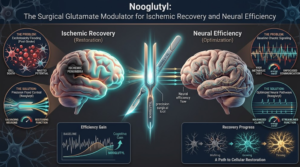
Nooglutyl: The Surgical Glutamate Modulator for Ischemic Recovery and Neural Efficiency
Ionotropic Glutamate Receptor Interaction: The Nicotinoyl-Carbonyl Mechanism N-5-hydroxynicotinoyl-L-glutamic acid (Nooglutyl) functions as a structural modulator of ionotropic glutamate receptors through its unique hydroxynicotinoyl scaffold; this configuration enables selective binding to NMDA...
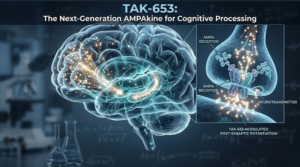
TAK-653: The Next-Generation AMPAkine for Cognitive Processing
AMPA Receptor Modulation: The Glutamate Amplification Mechanism TAK-653 represents a novel benzothiazole derivative that functions as a positive allosteric modulator of AMPA receptors. The compound binds to the transmembrane domain of AMPA receptor subunits, enhancing channel conductance without...
L-Tryptophan: The Essential Clinical Guide to Serotonin and Sleep Optimization
L-Tryptophan: The Essential Clinical Guide to Serotonin and Sleep Optimization L-tryptophan represents one of nine essential amino acids required for human protein synthesis. The indole-containing compound serves as the sole dietary precursor for serotonin synthesis. Humans cannot synthesize the...
Phosphatidylcholine: The Phospholipid Foundation of Cellular Intelligence
Phosphatidylcholine: PEMT Pathway and Membrane Optimization Phosphatidylcholine stands as the predominant glycerophospholipid in mammalian cellular membranes. This amphipathic molecule provides the structural foundation for all eukaryotic life. The compound represents approximately fifty percent...
L-Glutamine: The Neuro-Protective Barrier Between Excitation and Toxicity
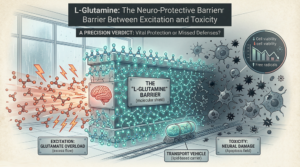
L-Glutamine neuroprotection: The clinical guide to ammonia detoxification, mTOR activation, and blood-brain barrier maintenance.
Ashwagandha Anhedonia: Why Your ‘Stress Shield’ Triggered an Emotional Void
Ashwagandha Anhedonia: The HPA Axis Suppression Mechanism Ashwagandha Anhedonia is the silent price many biohackers pay for trading acute, cortisol-driven anxiety for total emotional anesthesia. You expected a biological shield against stress; you received a sensory void that has rendered your...
The Longevity Scorecard: An Aggressive Audit of the Big 5 Expert Protocols
The SuperMindHacker Longevity Scorecard: What the World’s Top Experts Actually Agree On You have watched hundreds of longevity podcasts. Expert consensus validates the mechanism across diverse populations. Every influencer recommends a different $200 molecule claiming to extend your lifespan. The...
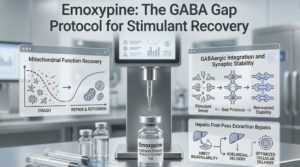
Emoxypine: The GABA Gap Protocol for ‘Wired but Tired’ Stimulant Recovery
Is Emoxypine an Actual GABA-A Receptor Stabilizer for Stimulant Recovery? Stimulant use creates a neurochemical debt that outlasts the acute effects. The GABA-glutamate balance shifts toward excitotoxicity; anxiety and insomnia follow as the brain struggles to restore equilibrium. Emoxypine...