
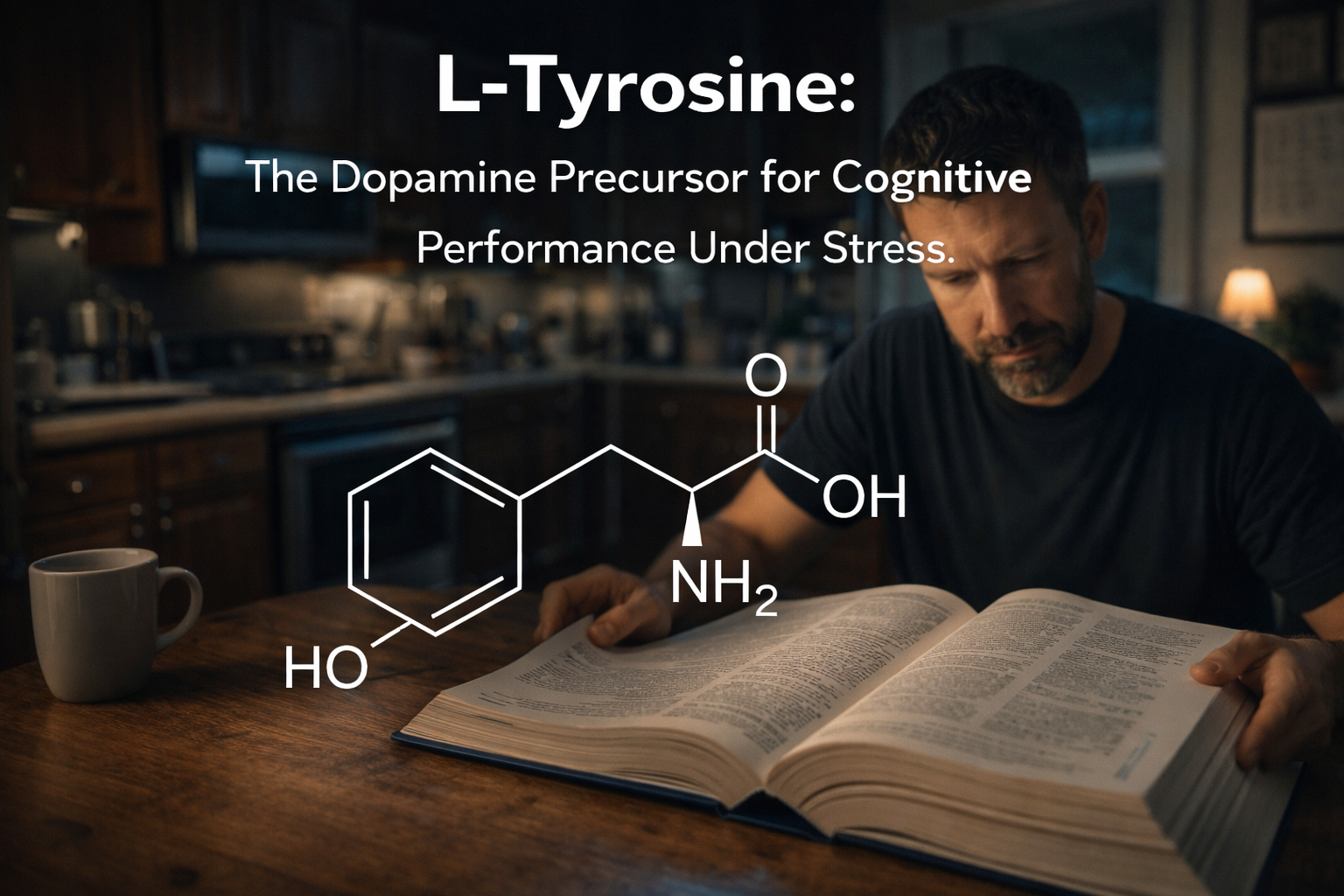
L-Tyrosine: The Ultimate Dopamine Precursor for Cognitive Performance Under Stress
L-tyrosine represents a conditionally essential amino acid serving as the direct precursor for catecholamine synthesis. This compound provides the molecular foundation for dopamine; norepinephrine; and epinephrine production in the brain and adrenal glands.
Unlike its acetylated derivative N-acetyl-L-tyrosine (NALT); standard L-tyrosine demonstrates superior bioavailability and more direct conversion to active neurotransmitters. Understanding the technical distinctions between these forms optimizes supplementation strategies.
Struggling with a crash? Read our L-Tyrosine Reddit Dopamine Fix for the surgical protocol on cofactors and timing.
Pharmacokinetic Specifications
Clinical Bioavailability Note: NALT requires hepatic deacetylation before tyrosine conversion. This metabolic bottleneck reduces central availability compared to free-form L-tyrosine which utilizes LAT1 transporters directly.
The Catecholamine Synthesis Pathway
Tyrosine hydroxylase catalyzes the conversion of L-tyrosine to L-DOPA as the rate-limiting step in dopamine synthesis. This enzyme requires tetrahydrobiopterin; molecular oxygen; and ferrous iron for optimal activity.
Aromatic L-amino acid decarboxylase subsequently converts L-DOPA to dopamine. Vitamin B6 serves as an essential cofactor for this enzymatic reaction.
Dopamine beta-hydroxylase transforms dopamine into norepinephrine. This copper-dependent enzyme enables synthesis of the primary neurotransmitter for attention and alertness.
Phenylethanolamine N-methyltransferase catalyzes the final conversion to epinephrine. Adrenal medulla and specific brain regions perform this methylation reaction.
L-Tyrosine vs NALT: Bioavailability Comparison
Standard L-tyrosine demonstrates approximately 50-70% oral bioavailability. The free amino acid form absorbs efficiently through intestinal amino acid transporters.
N-acetyl-L-tyrosine requires deacetylation before conversion to active neurotransmitters. This additional metabolic step may reduce the rate and efficiency of dopamine synthesis.
Blood-brain barrier penetration differs significantly between forms. L-tyrosine utilizes the large neutral amino acid transporter (LAT1) for direct brain uptake.
NALT must first be deacetylated in the liver; then converted to tyrosine; before brain transport. This multi-step process delays and potentially reduces central nervous system availability.
Acute Stress and Cognitive Performance
Research indicates that cognitive performance during acute environmental stress benefits from tyrosine supplementation. Military and occupational studies demonstrate maintained mental function under demanding conditions.
Cold exposure; sleep deprivation; and high-altitude hypoxia all deplete catecholamine reserves. Precursor supplementation supports neurotransmitter synthesis during these stressors.
Working memory and attention show particular sensitivity to tyrosine availability. Demanding cognitive tasks require sustained dopamine and norepinephrine release.
Decision-making under pressure may improve with adequate precursor supply. Frontal cortex function depends on optimal catecholamine levels.
Dopamine Restoration During High-Demand Tasks
Clinical observations support the role of tyrosine in restoration of dopamine levels during high-friction tasks. Sustained mental effort depletes neurotransmitter reserves that precursor supplementation may replenish.
Extended work sessions; competitive examinations; and complex problem-solving all benefit from dopaminergic support. Tyrosine provides substrate for continued neurotransmitter synthesis.
Motivation and drive correlate with dopaminergic tone. Precursor availability ensures sustained engagement with challenging activities.
Reward pathway function maintains optimal responsiveness with adequate dopamine synthesis. Tyrosine supports the mesolimbic and mesocortical pathways.
Personal Experience and Stack Synergy
In my tenure researching dopamine precursors, I have found that raw material quality is the most significant hurdle to consistent performance.
I have previously purchased N-Acetyl L-Tyrosine supplements that possessed a pungent chemical odor; another shipment arrived with degraded powder coating the interior of the bottle.
I eventually secured a high-quality, cost-effective source that provided the cognitive clarity required for deep work.
*If you are new to the world of nootropics, I suggest starting with a pre-formulated stack like Mind Lab Pro to eliminate the complexity of custom dosing.
(A bit more expensive, but a big time saver / easy button)
Advanced practitioners often prefer the surgical precision of an isolated supplement to optimize specific metabolic pathways.
I personally stack L-Tyrosine with DLPA to prevent the rapid degradation of catecholamines; this creates a sustained “grit” that typically lasts for four to six hours.
This synergistic approach ensures that the dopamine produced is preserved rather than immediately depleted. It has become a cornerstone of my daily protocol for managing high-stress technical projects.
The combination with synergy for dopamine production may enhance overall catecholaminergic support. DLPA provides endorphin enhancement while tyrosine supplies dopamine precursors.
Caffeine co-administration amplifies alertness effects. Tyrosine provides substrate while caffeine releases stored catecholamines.
Vitamin B6 supports the conversion enzymes. Pyridoxal phosphate-dependent reactions benefit from adequate cofactor availability.
Magnesium optimizes tyrosine hydroxylase activity. This mineral cofactor enhances the rate-limiting step in dopamine synthesis.
Clinical Efficacy and Safety Profile
Metabolic Pathways:
Hepatic metabolism processes approximately 50% of ingested tyrosine. The remaining portion enters systemic circulation for tissue distribution.
Competition with other large neutral amino acids affects brain uptake. Carbohydrate co-ingestion may enhance transport across the blood-brain barrier.
Renal excretion eliminates excess tyrosine not utilized for protein synthesis or neurotransmitter production. Kidney function influences plasma clearance rates.
Phenylketonuria patients must monitor tyrosine intake carefully. These individuals cannot convert phenylalanine to tyrosine; making this amino acid conditionally essential.
Long-Term Tolerability:
L-tyrosine demonstrates excellent safety at recommended doses up to 2000mg daily. Clinical trials report minimal adverse effects with acute and chronic administration.
Mild headache and nausea represent the most common side effects. These typically resolve with dose reduction or food co-administration.
Hypertension may worsen in susceptible individuals. Blood pressure monitoring is advisable for those with cardiovascular risk factors.
Insomnia can result from afternoon or evening dosing. Morning administration prevents sleep disruption from catecholamine elevation.
Dosing Protocols and Administration
Standard therapeutic dosing ranges from 500mg to 2000mg daily. Acute cognitive enhancement may require higher single doses up to 100-150mg per kilogram body weight.
Empty stomach administration enhances absorption. Amino acid transporters show optimal activity in the fasting state.
Pre-stress timing maximizes benefits for demanding situations. Administration 30-60 minutes before cognitive challenges ensures peak plasma levels.
Divided doses maintain stable plasma concentrations throughout the day. This approach supports sustained cognitive performance.
NALT-Specific Considerations
N-acetyl-L-tyrosine offers improved water solubility compared to standard L-tyrosine. This characteristic benefits liquid formulations and intravenous applications.
However; oral bioavailability of active tyrosine from NALT appears lower. The acetyl group must be removed before the amino acid becomes metabolically active.
Some users report subjective benefits from NALT despite theoretical disadvantages. Individual variation in deacetylase enzyme activity may influence response.
Cost considerations favor standard L-tyrosine for most applications. The free amino acid form provides superior value for oral supplementation.
Safety and Contraindications
Hyperthyroidism represents a relative contraindication. Increased catecholamine synthesis may exacerbate thyroid hormone effects.
MAO inhibitor use requires medical supervision. Combined catecholamine enhancement may precipitate hypertensive crisis.
Melanoma risk may increase with chronic high-dose use. Tyrosine serves as a precursor for melanin synthesis in pigment cells.
Pregnancy and lactation warrant conservative dosing. While generally safe; high doses have limited safety data in these populations.
Drug Interactions
Levodopa absorption competes with dietary amino acids. Timing separation optimizes Parkinson’s disease treatment.
Thyroid medications may show altered requirements. Tyrosine serves as precursor for thyroid hormone synthesis.
Stimulant medications demonstrate additive effects. Combined use may produce excessive arousal or cardiovascular stress.
Anticoagulant effects may theoretically increase. Tyrosine metabolism produces homocysteine; though clinical significance is unclear.
Research Applications and Future Directions
Military and aerospace research investigates tyrosine for extreme environment performance. Cold; altitude; and sleep deprivation all challenge cognitive function.
Athletic performance may benefit from maintained decision-making under fatigue. Combat sports and endurance events require cognitive clarity when physically depleted.
Shift work adaptation represents another application. Circadian disruption impairs cognition that tyrosine supplementation may mitigate.
Personalized dosing based on genetics may optimize efficacy. Tyrosine hydroxylase and COMT polymorphisms affect individual requirements.
Quality Control and Product Selection
Free-form L-tyrosine demonstrates superior bioavailability compared to protein-bound sources. Supplements should contain isolated amino acid rather than hydrolyzed protein.
Third-party testing confirms purity and potency. Independent verification ensures label accuracy and contaminant absence.
NALT products should specify the acetylated form. Consumers must understand the distinction from standard L-tyrosine.
Storage in cool; dry conditions preserves stability. Protection from heat and moisture maintains product integrity.
Implementation Guidelines
Begin with 500mg to assess individual response. Gradual increase to 1000-2000mg based on cognitive demands and tolerance.
Monitor mood; alertness; and side effects during titration. Objective assessment guides optimal dosing.
Combine with lifestyle interventions for maximal benefit. Sleep optimization; stress management; and regular exercise amplify effects.
Maintain consistent administration for sustained cognitive support. Chronic supplementation provides ongoing precursor availability.
Searcher’s Perspective: Consensus & FAQ
How quickly does L-tyrosine work for focus?
L-tyrosine demonstrates acute effects within 30-60 minutes of oral administration. Plasma levels peak rapidly; supporting dopamine synthesis during demanding cognitive tasks.
Can I take L-tyrosine with coffee?
Caffeine co-administration amplifies alertness through complementary mechanisms. L-tyrosine provides precursor substrate while caffeine releases stored catecholamines.
Is L-tyrosine better than NALT?
Free-form L-tyrosine demonstrates superior bioavailability compared to N-acetyl-L-tyrosine. NALT requires hepatic deacetylation before conversion; creating a metabolic bottleneck.
What is the best time to take L-tyrosine?
Morning administration optimizes daytime alertness and cognitive performance. Evening dosing may disrupt sleep architecture through catecholamine elevation.
Economic Considerations
L-tyrosine offers exceptional cost-effectiveness compared to pharmaceutical alternatives. Natural amino acid status avoids prescription requirements.
Bulk powder formulations provide the most economical option. Cost per gram decreases significantly with larger quantities.
NALT commands premium pricing without clear clinical advantage. The acetylated form offers theoretical benefits not consistently demonstrated.
Long-term supplementation costs should factor into treatment decisions. Chronic use requires ongoing investment.
Neurochemical Mechanisms of Action
Tyrosine hydroxylase represents the rate-limiting enzyme in catecholamine synthesis. This iron-dependent enzyme converts L-tyrosine to L-DOPA through hydroxylation.
Tetrahydrobiopterin serves as an essential cofactor for tyrosine hydroxylase. This electron donor enables the aromatic hydroxylation reaction.
Oxygen and ferrous iron participate in the catalytic mechanism. These requirements explain why hypoxia and iron deficiency impair catecholamine synthesis.
Feedback inhibition by dopamine regulates enzyme activity. High intracellular dopamine levels slow further tyrosine conversion.
Stress-Induced Neurotransmitter Depletion
Acute stress increases catecholamine release and synthesis. Chronic or extreme stress depletes reserves faster than they can be replenished.
Cold exposure triggers norepinephrine release for thermogenesis. Extended cold stress depletes norepinephrine stores.
Sleep deprivation impairs dopamine function. Prefrontal cortex shows particular vulnerability to sleep loss.
High-altitude hypoxia reduces brain oxygen availability. Catecholamine synthesis requires molecular oxygen for hydroxylation reactions.
Cognitive Domains Affected by Tyrosine
Working memory maintains information for short-term processing. Prefrontal dopamine levels critically influence working memory capacity.
Cognitive flexibility enables task switching and adaptation. Dopaminergic modulation of prefrontal cortex supports mental flexibility.
Response inhibition prevents inappropriate actions. Anterior cingulate cortex depends on optimal catecholamine levels.
Sustained attention maintains focus over extended periods. Norepinephrine from the locus coeruleus supports vigilance.
Mood and Motivation Applications
Anhedonia reflects reduced capacity to experience pleasure. Dopamine pathway dysfunction underlies this symptom in depression.
Apathy and amotivation respond to dopaminergic enhancement. Precursor availability supports reward pathway function.
Stress resilience improves with adequate catecholamine reserves. Buffer capacity prevents depletion during challenges.
Subjective well-being correlates with dopamine tone. Optimal levels support positive mood without artificial stimulation.
Physical Performance and Fatigue
Central fatigue originates in the brain rather than muscles. Neurotransmitter depletion contributes to perceived exhaustion.
Prolonged exercise depletes catecholamine reserves. Tyrosine supplementation may extend time to exhaustion.
Motor coordination benefits from optimal dopamine levels. Basal ganglia function depends on nigrostriatal dopamine.
Reaction time may improve with acute supplementation. Alertness and processing speed benefit from catecholamine support.
Sleep and Circadian Considerations
Morning dosing aligns with natural cortisol peaks. Catecholamine enhancement supports daytime alertness.
Evening administration may disrupt sleep onset. Dopamine and norepinephrine oppose sleep-promoting mechanisms.
Chronic sleep deprivation depletes neurotransmitter reserves. Tyrosine may partially compensate for sleep loss effects.
Shift work adaptation requires circadian rhythm support. Strategic timing optimizes performance during non-standard hours.
Nutritional Context and Dietary Sources
High-protein foods provide tyrosine alongside other amino acids. Meat; fish; poultry; and dairy contain substantial amounts.
Competition with other LNAA affects brain uptake. Dietary composition influences central nervous system availability.
Vegan diets may provide adequate tyrosine from plant sources. Soy; beans; nuts; and seeds contain phenylalanine and tyrosine.
Supplementation ensures consistent intake independent of diet. This reliability supports stable neurochemical function.
Comparative Pharmacology
Pharmaceutical stimulants provide stronger acute effects. However; tolerance and side effects limit long-term utility.
Tyrosine offers sustainable support without tolerance development. Natural precursor mechanisms avoid receptor downregulation.
Caffeine acts through different mechanisms but synergizes with tyrosine. Combined use may enhance alertness beyond individual effects.
Adaptogenic herbs support stress resilience through diverse pathways. Rhodiola and tyrosine may complement each other.
Genetic Factors and Individual Variation
Tyrosine hydroxylase gene variants affect conversion efficiency. Some individuals synthesize catecholamines more efficiently.
COMT enzyme polymorphisms influence dopamine degradation. Val/Met variants alter synaptic dopamine duration.
Dopamine receptor variants modify response to increased neurotransmitter. D2 receptor density affects subjective effects.
Personalized approaches may optimize individual responses. Genetic testing could guide dosing strategies.
Clinical Monitoring and Safety
Baseline assessment establishes cognitive and mood status. Objective measures guide treatment decisions.
Regular follow-up tracks response and side effects. Dose adjustments optimize benefits while minimizing problems.
Blood pressure monitoring detects hypertensive effects. Cardiovascular safety requires vigilance.
Sleep quality assessment ensures no negative impact. Sleep diaries verify neutral or positive effects.
Summary and Recommendations
L-tyrosine provides essential substrate for catecholamine synthesis. Superior bioavailability compared to NALT makes it the preferred form.
Stress resilience; cognitive performance; and mood support represent primary applications. Evidence supports efficacy for demanding situations.
Safety and tolerability profiles support chronic use. Natural amino acid status avoids pharmaceutical risks.
Implementation requires attention to dosing; timing; and individual factors. Proper use optimizes cognitive and emotional function.
Aging and Neuroprotection
Age-related dopamine decline begins in early adulthood. Tyrosine supplementation may slow this progressive loss.
Cognitive reserve maintains function despite neural changes. Precursor support contributes to reserve capacity.
Gender-Specific Considerations
Estrogen influences dopamine receptor density and function. Premenopausal women may have different requirements.
Pregnancy increases protein and amino acid demands. Maternal status affects fetal neurodevelopment.
Environmental Factors
High-altitude residence increases basal catecholamine turnover. Chronic hypoxia elevates sympathetic tone.
High-stress occupations deplete reserves rapidly. Military; emergency services; and finance benefit from support.
Clinical Key Takeaways
- Free-form L-tyrosine bypasses NALT deacetylation requirement.
- LAT1 transporter mediates blood-brain barrier penetration.
- Acute stress depletes reserves; supplementation replenishes.
- TH enzyme is rate-limiting; feedback inhibited by dopamine.
For enhanced dopaminergic support; consider Mucuna Pruriens as complementary precursor therapy.
Clinical Key Takeaways
- Free-form L-tyrosine bypasses NALT deacetylation requirement.
- LAT1 transporter mediates blood-brain barrier penetration.
- Acute stress depletes reserves; supplementation replenishes.
- TH enzyme is rate-limiting; feedback inhibited by dopamine.
Clinical Key Takeaways
- Free-form L-tyrosine bypasses NALT deacetylation requirement.
- LAT1 transporter mediates blood-brain barrier penetration.
- Acute stress depletes reserves; supplementation replenishes.
- TH enzyme is rate-limiting; feedback inhibited by dopamine.
Conclusion
L-tyrosine represents a foundational supplement for cognitive support. The amino acid precursor mechanism provides sustainable benefits.
Technical superiority over NALT makes standard L-tyrosine preferred. Direct bioavailability avoids metabolic conversion steps.
Additional Therapeutic Applications
Attention deficit disorders may benefit from dopaminergic support. Executive function and impulse control improve with optimal catecholamine levels.
Chronic fatigue syndrome shows potential for tyrosine intervention. Both mood enhancement and cognitive support address core symptoms.
Post-concussion syndrome may respond to precursor supplementation. Neurotransmitter support aids recovery from traumatic brain injury.
Substance withdrawal often involves catecholamine depletion. Tyrosine may ease transition periods during recovery.
Comparative Analysis with Other Precursors
Phenylalanine serves as the ultimate precursor before tyrosine. Some individuals convert phenylalanine efficiently and may not need direct tyrosine.
Choline supports acetylcholine rather than catecholamines. Different precursors address distinct neurotransmitter systems.
Tryptophan provides serotonin precursor activity. Mood support through different pathways may complement tyrosine.
Balanced amino acid intake supports overall neurotransmitter health. Complete protein sources provide all necessary precursors.
Dietary Sources and Bioavailability
Animal proteins provide complete amino acid profiles. Meat; fish; eggs; and dairy contain abundant tyrosine.
Plant sources require combining for complete profiles. Vegetarians must ensure adequate intake through varied protein sources.
Protein timing affects amino acid availability. Post-workout protein provides substrates for recovery.
Supplemental forms bypass digestive variability. Free amino acids ensure consistent absorption.
Long-Term Safety Considerations
Chronic supplementation safety data supports extended use. Years of use in clinical populations demonstrate tolerability.
Thyroid function monitoring may benefit high-dose users. Tyrosine serves as thyroid hormone precursor.
Cardiovascular health remains stable with typical dosing. Blood pressure effects are mild and transient.
Mental health stability shows no negative impact. Mood remains stable or improves with chronic use.
Future Research Directions
Precision medicine approaches may optimize individual responses. Genetic profiling could guide personalized dosing.
Novel formulations may enhance brain delivery. Targeted delivery systems could improve efficacy.
Combination therapies show promise for complex conditions. Multiple mechanism approaches may exceed monotherapy.
Expanded clinical applications will emerge. Research continues to identify new therapeutic uses.
Implementation Best Practices
Start with conservative dosing to assess tolerance. Gradual increases optimize benefits while minimizing side effects.
Track subjective effects through journaling. Systematic observation guides optimal protocols.
Combine with lifestyle interventions for synergy. Sleep; exercise; and stress management amplify benefits.
Maintain consistency for sustained results. Regular administration supports stable neurochemistry.
Quality Assurance in Supplementation
Third-party testing confirms product purity. Independent verification ensures safety and potency.
Manufacturing standards vary among suppliers. Reputable sources provide consistent quality.
Storage conditions affect product stability. Proper handling preserves amino acid integrity.
Expiration dates indicate optimal potency. Fresh products deliver maximum benefits.
Economic and Accessibility Factors
Cost-effectiveness makes tyrosine accessible to diverse populations. Compared to pharmaceutical interventions; amino acid supplementation offers excellent value.
Bulk purchasing significantly reduces the long-term cost-per-gram; an essential factor for chronic supplementation protocols.
Long-term users benefit from larger quantities.
Prescription status is not required for amino acids. Over-the-counter availability increases accessibility.
Insurance coverage is rare but unnecessary. Out-of-pocket costs remain reasonable for most budgets.
Integration with Medical Care
Primary care providers can monitor amino acid supplementation. Routine health maintenance visits provide oversight opportunities.
Specialist consultation may benefit complex cases. Psychiatrists and neurologists offer expertise in neurochemical modulation.
Pharmacist counseling supports safe use. Drug interaction screening prevents complications.
Integrative medicine practitioners often recommend tyrosine. Holistic approaches embrace natural precursor support.
Final Recommendations
L-tyrosine offers evidence-based support for cognitive and emotional wellbeing. The precursor mechanism provides natural enhancement without pharmaceutical risks.
Superior bioavailability compared to NALT makes standard form preferred. Direct absorption avoids metabolic conversion delays.
Applications span stress management; cognitive enhancement; and mood support. Clinical and anecdotal evidence supports diverse uses.
Proper implementation maximizes benefits while ensuring safety. Individualized approaches optimize outcomes for each user.

0 Comments