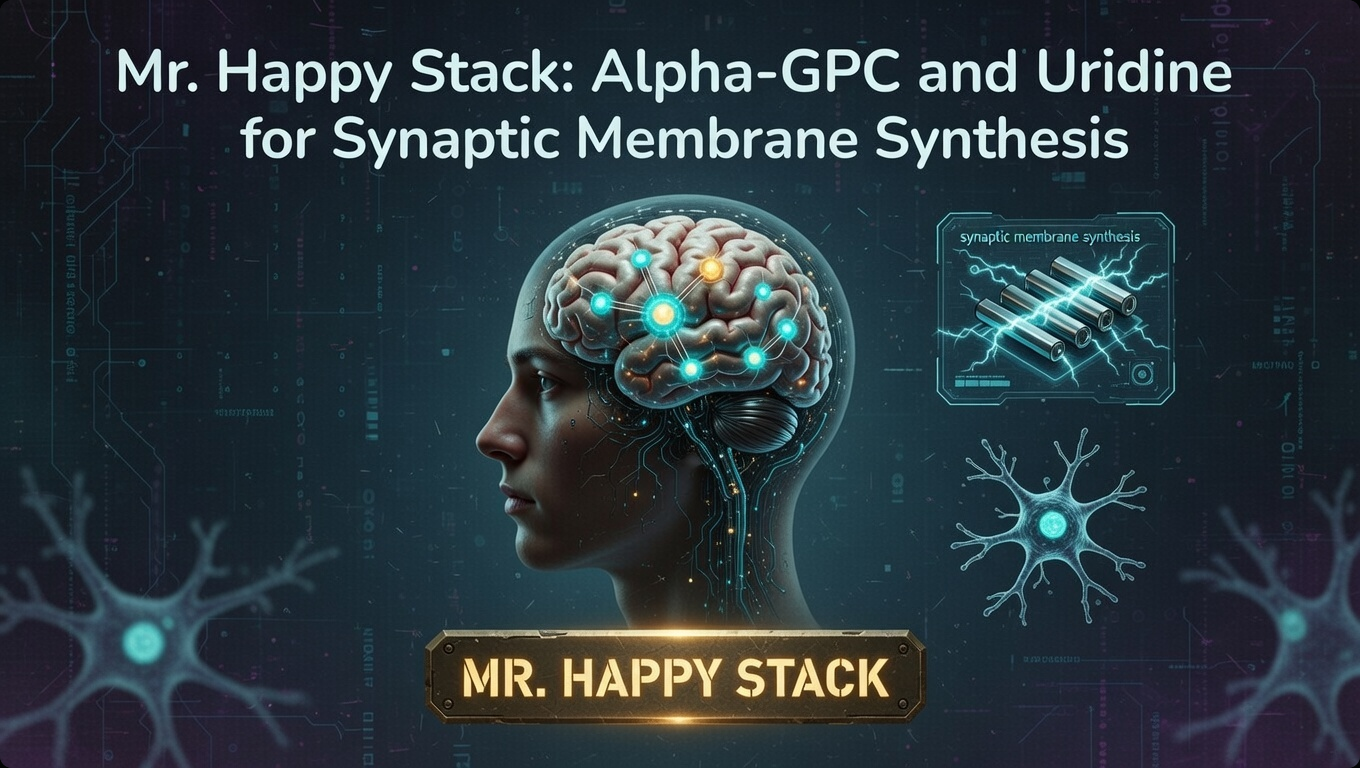
The Mr. Happy Stack combines Alpha-GPC and uridine monophosphate to support synaptic membrane synthesis and dopaminergic neurotransmission.
This pairing addresses the phospholipid foundation of neural communication while enhancing the synaptic membrane synthesis essential for receptor function. Users report improved mood; motivation; and cognitive clarity from this synergistic approach.
The stack’s name reflects its purported ability to enhance wellbeing through multiple neurochemical pathways. Unlike stimulants that force dopamine release; this combination supports the structural substrates of healthy signaling.
The effects emerge gradually as membrane phospholipids incorporate supplemented precursors.
Alpha-GPC: The Choline Donor
Mechanisms of Acetylcholine Support
Alpha-GPC delivers choline efficiently across the blood-brain barrier. This glycerophosphocholine form bypasses rate-limiting conversion steps required by choline bitartrate. The result is rapid elevation of brain choline levels available for acetylcholine synthesis.
Acetylcholine serves as the primary neurotransmitter for attention; learning; and memory formation. Cholinergic neurons project throughout the cortex and hippocampus; modulating synaptic plasticity. Alpha-GPC supports these functions through enhanced precursor availability.
The compound also provides glycerophosphate for membrane phospholipid synthesis. This dual action distinguishes Alpha-GPC from simple choline salts. The membrane support complements the neurotransmitter enhancement.
Pharmacokinetic Advantages
Alpha-GPC achieves higher brain choline levels than equivalent doses of choline bitartrate. The glycerophosphate moiety enhances both absorption and distribution. This superior bioavailability translates to more reliable cognitive effects.
The compound crosses the blood-brain barrier through active transport mechanisms. Peak plasma concentrations occur within one to two hours of oral administration. This rapid uptake supports acute cognitive demands.
Acetylcholine Synthesis Pathway
Choline acetyltransferase catalyzes the formation of acetylcholine from choline and acetyl-CoA. This enzyme operates in cholinergic nerve terminals throughout the brain. Alpha-GPC provides the choline substrate for this synthetic reaction.
The acetyl-CoA requirement links cholinergic function to cellular energy status. Mitochondrial ATP production must support acetylcholine synthesis. This metabolic dependency explains why fatigue impairs cholinergic neurotransmission.
Dosing and Administration
Standard dosing ranges from 300 to 600 milligrams daily. This provides sufficient choline for acetylcholine synthesis without overwhelming receptor systems. Higher doses may produce cholinergic side effects including headache or fatigue.
Twice-daily dosing maintains stable choline levels throughout waking hours. Morning and early afternoon administration avoids sleep disruption. Individual chronobiology determines optimal timing.
Bioavailability exceeds that of other choline forms. The glycerophosphate moiety enhances both absorption and brain uptake. This pharmacokinetic profile supports lower effective doses compared to choline salts.
Uridine: The Pyrimidine Precursor
Phosphatidylcholine Synthesis
Uridine monophosphate serves as the rate-limiting precursor for phosphatidylcholine synthesis. This phospholipid constitutes a major component of synaptic membranes. Supplementation enhances the structural substrate for receptor embedding.
The brain synthesizes phosphatidylcholine through the Kennedy pathway. Uridine provides the cytidine diphosphate moiety required for this process. Without adequate uridine; membrane synthesis slows regardless of choline availability.
The Kennedy pathway operates in neuronal membranes throughout the brain. This distributed synthesis allows local membrane maintenance. Uridine availability thus supports synaptic function across neural circuits.
DHA Synergy
Docosahexaenoic acid synergizes with uridine for membrane formation. The omega-3 fatty acid incorporates into phospholipid tails alongside choline heads. This combination produces membranes with optimal fluidity and function.
DHA constitutes a major fatty acid in neural phospholipids. The brain cannot synthesize DHA efficiently; requiring dietary intake. Supplementation ensures adequate substrate for membrane synthesis.
Membrane Turnover
Neural membranes undergo continuous turnover and remodeling. Phospholipids are synthesized; degraded; and replaced throughout life. This dynamic process allows adaptation to changing metabolic demands.
Uridine supplementation accelerates membrane turnover in animal models. Enhanced precursor availability supports faster phospholipid synthesis. The clinical significance for human cognition requires further investigation.
Dopamine Receptor Modulation
Uridine influences dopamine signaling through multiple mechanisms. The compound upregulates dopamine receptor density in animal models. This effect may enhance sensitivity to endogenous dopamine release.
Phosphatidylcholine incorporation into membranes affects receptor conformation. Optimal membrane fluidity supports efficient G-protein coupling. Uridine’s structural role thus modulates dopaminergic transmission.
The dopamine D2 receptor particularly depends on membrane lipid composition. Uridine-enhanced phospholipid synthesis may optimize D2 function. This mechanism complements Alpha-GPC’s cholinergic effects.
The Synaptic Membrane Connection
Why Structure Matters
Synaptic transmission depends on the physical architecture of neuronal membranes. Receptors embed in phospholipid bilayers that determine their conformation. Membrane composition influences everything from receptor density to ion channel function.
The Mr. Happy Stack addresses both phospholipid precursors simultaneously. Alpha-GPC provides the choline headgroup while uridine supplies the cytidine diphosphate backbone. Together they support complete phosphatidylcholine synthesis.
This structural approach distinguishes the stack from simple neurotransmitter precursors. Rather than forcing increased signaling; the combination enables optimal membrane architecture. The effects emerge as new membranes incorporate supplemented phospholipids.
Receptor Embedding
G-protein coupled receptors span the phospholipid bilayer multiple times. The lipid environment affects receptor conformation and signaling efficiency. Optimal membrane composition supports robust receptor function.
Cholesterol and phospholipids create specialized membrane microdomains. These lipid rafts concentrate receptors and signaling molecules. Uridine-supported phospholipid synthesis may enhance microdomain formation.
Timeline of Effects
Synaptic membrane synthesis requires days to weeks for completion. The Kennedy pathway operates continuously but slowly. Users should expect gradual rather than immediate benefits.
Acetylcholine effects from Alpha-GPC may emerge within hours. The membrane synthesis effects require longer incubation. This dual timeline produces initial cholinergic clarity followed by sustained structural enhancement.
Optimal protocols extend for four to eight weeks. This duration allows significant membrane turnover and phospholipid incorporation. Shorter periods may not achieve full synaptic remodeling.
The Mr. Happy Hangover
Why the Stack Stops Working
Many users report diminishing returns after initial success with the Mr. Happy Stack. The combination produces noticeable benefits for weeks or months; then effects fade. This pattern reflects the underlying pharmacology rather than product quality.
The initial benefits likely stem from correcting subclinical deficiencies. Marginal choline or uridine status improves with supplementation. Once optimal levels are achieved; additional precursor provides diminishing returns.
Furthermore; membrane synthesis reaches a steady state. The Kennedy pathway cannot accelerate indefinitely. Continued supplementation maintains but does not progressively enhance synaptic structure.
Receptor Adaptation
Chronic cholinergic stimulation produces receptor downregulation. Muscarinic receptors decrease in density with sustained acetylcholine elevation. This adaptation explains tolerance to Alpha-GPC effects.
Similar mechanisms may affect dopamine receptors with prolonged uridine use. Receptor expression adapts to chronic changes in membrane composition. Cycling may prevent these homeostatic responses.
Cycling Strategies
Strategic interruption may preserve responsiveness to the Mr. Happy Stack. Four weeks on followed by two weeks off allows metabolic reset. This pattern prevents the receptor adaptations that blunt chronic supplementation.
Alternatively; pulsed dosing with higher amounts on demanding days maintains sensitivity. Continuous moderate dosing produces adaptation. Variable intake better mimics natural precursor availability.
Individual variation in baseline status determines optimal cycling. Those with low dietary choline or DHA may benefit from longer supplementation periods. Regular assessment guides personalized protocols.
Implementation and Optimization
Standard Protocol
The foundational Mr. Happy Stack combines 300mg Alpha-GPC with 150mg uridine monophosphate. This ratio reflects the stoichiometry of phosphatidylcholine synthesis. Twice-daily dosing maintains stable precursor levels.
Morning administration aligns with natural cholinergic peaks. Evening dosing may impair sleep through acetylcholine’s alerting effects. Individual chronobiology determines optimal timing.
DHA supplementation at 1000mg daily completes the membrane synthesis triad. The omega-3 fatty acid incorporates into phospholipids alongside choline and uridine. Without DHA; membrane benefits are incomplete.
Phosphatidylserine Addition
Some users add phosphatidylserine for additional membrane support. This phospholipid complements phosphatidylcholine in synaptic architecture. The combination may exceed either alone for cognitive benefits.
Phosphatidylserine constitutes a minor but important membrane component. This anionic phospholipid affects membrane signaling properties. Supplementation at 100-300mg daily may enhance the stack.
Advanced Modifications
Vitamin B12 and folate support methylation reactions in phospholipid metabolism. Deficiencies in these cofactors impair membrane synthesis. Testing and correction optimize stack efficacy.
Magnesium supports the ATP-dependent reactions of phospholipid synthesis. Adequate magnesium status ensures precursor utilization. Many users benefit from concurrent magnesium supplementation.
Antioxidants including vitamin E protect membrane phospholipids from oxidation. Polyunsaturated fatty acids in neural membranes are vulnerable to peroxidation. Protection preserves membrane integrity.
Scientific Evidence and Limitations
Preclinical Research
Animal studies demonstrate that uridine increases phosphatidylcholine synthesis in brain tissue. The Kennedy pathway responds to uridine availability with enhanced membrane production. This mechanism is well-established in biochemical literature.
Alpha-GPC elevates acetylcholine levels in rodent models. The glycerophosphocholine form crosses the blood-brain barrier more efficiently than choline salts. These pharmacokinetic advantages translate to enhanced cholinergic function.
Combined administration shows synergistic effects on synaptic protein expression. Uridine and DHA together increase dendritic spine density. The Mr. Happy Stack mimics this synergistic approach.
Limitations of Animal Models
Rodent brain metabolism differs substantially from human neurochemistry. Species differences in phospholipid metabolism may affect translation. Human trials are essential for validating preclinical findings.
The blood-brain barrier varies between species. Choline and uridine transport may differ in humans. Direct extrapolation from animal data involves uncertainty.
Human Clinical Data
Direct clinical trials of the Alpha-GPC plus uridine combination are limited. Individual components have been studied separately for cognitive function. The specific stack lacks large randomized controlled trials.
Alpha-GPC alone shows benefits for attention and memory in healthy adults. Uridine supplementation improves mood markers in some studies. The combination’s effects are extrapolated from these component trials.
Anecdotal reports significantly exceed published evidence. Users should approach the stack with appropriate expectations. The mechanisms are plausible but not definitively proven in combination.
Side Effects and Contraindications
Cholinergic Excess
Excessive Alpha-GPC produces classic cholinergic symptoms. Headache; nausea; and muscle cramps indicate dose intolerance. Reduction or discontinuation resolves these effects.
The “choline depression” phenotype responds poorly to supplementation. Some individuals experience mood worsening with excess acetylcholine. Genetic variation in cholinergic enzymes determines susceptibility.
Uridine is generally well-tolerated at moderate doses. Very high intake may cause gastrointestinal discomfort. Standard dosing rarely produces adverse effects.
Genetic Considerations
Polymorphisms in choline transporters affect individual responses. Some variants show enhanced transport efficiency. These individuals may require lower Alpha-GPC doses.
COMT genotype influences dopamine metabolism and uridine response. Fast metabolizers may experience different effects than slow metabolizers. Pharmacogenomic testing could guide personalization.
Drug Interactions
Acetylcholinesterase inhibitors potentiate Alpha-GPC effects. Combination with donepezil or similar drugs increases cholinergic activity. Medical supervision is essential when combining.
Dopaminergic medications may interact with the stack’s uridine component. Uridine’s influence on dopamine receptors could modify drug responses. Coordination with prescribing physicians is advised.
Anticoagulant effects of high-dose fish oil require monitoring. The DHA component of the stack enhances this consideration. Bleeding risk increases with concurrent anticoagulant use.
Practical Recommendations
Starting Protocol
Begin with Alpha-GPC alone at 300mg daily for one week. Assess tolerance and cholinergic effects. Add uridine at 150mg daily in week two.
Introduce DHA at 500mg daily; increasing to 1000mg over two weeks. Gradual escalation minimizes gastrointestinal side effects. Monitor mood and cognitive function throughout.
Maintain the complete stack for six to eight weeks. This duration allows meaningful membrane turnover. Assess benefits and decide on continuation.
Baseline Assessment
Document attention; memory; and motivation before starting. Objective cognitive testing provides validation. Subjective reports guide dosing adjustments.
Consider dietary intake of choline and omega-3 fatty acids. Those with low baseline intake may respond more dramatically. Assessment guides expectations and dosing.
Assessment and Adjustment
Track attention; memory; and motivation during supplementation. Objective cognitive testing provides validation. Subjective reports guide dosing adjustments.
Consider cycling off after eight to twelve weeks. The break reveals baseline function without supplementation. Return of benefits upon resumption confirms efficacy.
Individual optimization requires experimentation. The standard protocol provides a starting framework. Personal response determines long-term strategy.
Conclusion
The Mr. Happy Stack offers a mechanistically plausible approach to cognitive enhancement through synaptic membrane support. Alpha-GPC and uridine address complementary aspects of phospholipid synthesis. DHA completion optimizes membrane composition.
Realistic expectations acknowledge the gradual timeline and individual variation. The stack supports structure rather than forcing acute neurotransmitter changes. Benefits emerge as membranes incorporate supplemented precursors.
For those seeking to optimize cholinergic and dopaminergic function through structural support; the Mr. Happy Stack provides a research-grounded option. Careful implementation and assessment enable personalized optimization of this synergistic approach.